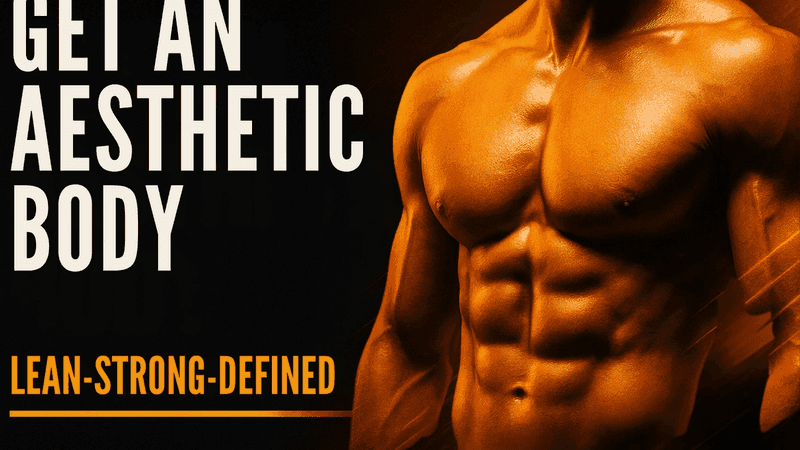
Fitness guide introduction
Alright, let me tell you something about guys who have that aesthetic look that'll probably make every Instagram fitness influencer want to block me. You know exactly what I'm talking about when you walk into any room and can spot them immediately. They're not necessarily the biggest guys there, and they're definitely not the most shredded. But there's something about the way their clothes fit, the way they carry themselves, that just screams "every other guy in here wishes he looked like me."
Their t-shirts actually fit properly instead of hanging loose around the chest and arms like a deflated balloon. When they wear a button-down, you can see the outline of their shoulders and chest without looking like they're trying to smuggle bowling balls under their shirt. At the beach, they're confident enough to take their shirt off without that split-second hesitation most guys have where they suck in their gut and hope nobody notices.
Here's what's really going to piss you off though. If you asked most guys what they think builds that look, they'd be completely wrong. Dead wrong. They'd tell you it's about benching 300 pounds or having 18-inch arms or getting down to 6% body fat like some dehydrated bodybuilder.
The reality is way different, and honestly, way more achievable than what the fitness industry wants you to believe. That naturally athletic, proportioned physique that makes people think "damn, he's built" comes from hitting very specific targets with your training and nutrition. Targets that have nothing to do with maxing out your bench press or spending two hours a day in the gym like it's your second job. Whether you're starting from skinny-fat and tired of your sleeves hanging loose like you're wearing your dad's clothes, or you're carrying extra weight and want to finally see the muscle you've been building underneath that layer of fat, the approach is the same.
Build the right muscle in the right places, get lean enough to see it clearly, and maintain the proportions that actually look impressive in the real world. Not in some fitness magazine, but when you're walking down the street or sitting across from someone at dinner.
The program below is exactly what builds that look. No fluff, no advanced techniques you don't need, no bullshit theories from guys who haven't trained anyone but themselves. Just the training and eating approach that gets you from wherever you are now to looking like you actually know what you're doing in the gym. And more importantly, looking like someone who doesn't live in the gym but still manages to look better than 90% of the guys who do.
The Complete Aesthetic Training Program
Here's where most guys get stuck in a cycle that costs them months of progress. They waste time jumping between programs like they're shopping for a new car because they think there's some secret advanced technique they're missing. Some magical rep range or rest period that's going to transform their physique overnight. The truth is way simpler than that, and it's going to disappoint everyone selling expensive "advanced muscle confusion protocols."
Aesthetic muscle comes from doing the right exercises consistently, focusing on the movements that build the proportions that actually look good, and progressively getting stronger at them over time.
That's it. This isn't about finding the perfect rep range or the most optimal rest periods that some fitness influencer calculated using their "proprietary system."
It's about prioritizing the exercises that build your V-taper while keeping everything else in proportion.
The 3-Day Aesthetic Split:
Day 1: Upper Body Focus
Pull-ups or Lat Pulldowns 4 sets of 8-12 reps Don't skip these if you want lats that create that impressive V-shaped back. This is the single most important exercise for building the back width that creates the aesthetic look. If you can't do pull-ups yet, use the pulldown machine and work toward bodyweight pull-ups as your goal. Dumbbell Bench Press 3 sets of 10-12 reps
Dumbbells give you better range of motion than barbell and help prevent muscle imbalances. Focus on controlled movement and really feeling your chest work instead of just moving heavy weight.
Lateral Raises 4 sets of 15-20 reps This is where shoulder width comes from, and shoulder width is what separates guys who look athletic from guys who look narrow. Use lighter weight than you might expect and focus on lifting with your side delts, not momentum.
Single-Arm Dumbbell Rows 3 sets of 10-12 reps each arm Builds the thickness in your back that creates a powerful silhouette. Keep your core tight and really squeeze at the top of each rep.
Face Pulls 3 sets of 15-20 reps Critical for rear delt development and keeping your shoulders healthy. Most guys skip this exercise and then wonder why they look narrow from behind and develop shoulder issues.
Dips 3 sets of 10-15 reps Excellent for building the lower chest and triceps. If bodyweight is too easy, add weight. If it's too challenging, use an assisted dip machine.
Dumbbell Curls 3 sets of 12-15 reps Yes, you need direct arm work for aesthetics, and compound movements alone won't give you the complete look. Focus on the muscle connection, not just the weight you're lifting.
Day 2: Lower Body and Core
Goblet Squats 4 sets of 12-15 reps Better for aesthetics than heavy back squats because they don't add unnecessary thickness to your midsection. Focus on depth and control rather than maximum weight.
Romanian Deadlifts 3 sets of 10-12 reps Builds your hamstrings and glutes without adding bulk to your midsection like conventional deadlifts can.
Walking Lunges 3 sets of 12 reps each leg Unilateral work prevents imbalances and builds functional leg strength without excessive mass.
Calf Raises 4 sets of 15-20 reps Proportioned calves are essential for the complete aesthetic look. Do these consistently and focus on the full range of motion.
Planks 3 sets of 45-60 seconds Better than crunches for building core stability without making your waist appear blocky.
Mountain Climbers 3 sets of 20 reps each leg Adds conditioning while working your core dynamically.
Day 3: Upper Body Volume
Incline Dumbbell Press 4 sets of 8-12 reps Targets the upper chest, which is crucial for that full, proportioned chest development.
Lat Pulldowns (Wide Grip) 3 sets of 10-12 reps Second lat exercise of the week because back width is that important for aesthetics.
Lateral Raises 4 sets of 15-20 reps Yes, you're doing these twice a week because shoulder width is the foundation of the aesthetic look.
Close-Grip Push-ups 3 sets of 12-15 reps Targets triceps and inner chest effectively. If regular push-ups are too easy, elevate your feet. If they're too challenging, modify as needed.
Hammer Curls 3 sets of 12-15 reps Works the biceps from a different angle and builds forearm development.
Tricep Extensions 3 sets of 12-15 reps Direct tricep work for balanced arm development.
Rear Delt Flyes 3 sets of 15-20 reps Additional rear delt work because most people are underdeveloped in this area.
Training Schedule:
Monday: Day 1 Tuesday: Rest or light cardio. Wednesday: Day 2
Thursday: Rest or light cardio. Friday: Day 3
Weekend: Rest
Progressive Overload for Aesthetics:
Each week, try to either add weight, add reps, or improve your form. Don't rush the process with dramatic increases. Adding 2.5-5 pounds per week on your main exercises is appropriate progress. For isolation exercises like lateral raises, focus more on adding reps or improving the mind-muscle connection. The goal isn't to set strength records but to gradually build muscle in the right places while maintaining proportions that look impressive.
Exercise Selection Notes:
Notice what's emphasized here: lots of lateral raises, multiple back exercises per week, moderate leg work. These priorities build the V-taper that creates the aesthetic physique. Also notice what's not emphasized: heavy squats and deadlifts, maximal bench pressing, excessive ab work. These exercises have their place, but they're not the foundation of aesthetic training. The focus here is on building the specific proportions that create an impressive, athletic appearance.
Aesthetic Nutrition That Actually Works
Here's where most guys completely sabotage months of perfect training without even realizing it. They'll follow a solid training program religiously, make impressive strength gains, build decent muscle, and then wonder why they still don't have that aesthetic look they're chasing.
The answer is usually staring right back at them in the mirror every morning. They're carrying too much body fat to see the muscle they've actually built. You can have perfect proportions and excellent muscle development, but if you're sitting at 18% body fat, you're going to look soft and undefined no matter how much muscle is hiding underneath.
Meanwhile, a guy with less overall muscle but sitting at 11% body fat is going to look significantly more impressive in a t-shirt, at the beach, and pretty much everywhere else. This is the harsh reality that the fitness industry doesn't want you to understand because it's much easier to sell you supplements and complicated meal plans than to tell you the simple truth. Aesthetic happens in a very specific body fat range, and if you're not there, nothing else matters nearly as much as you think it does.
The Aesthetic Body Fat Target:
For most guys, the sweet spot is 10-13% body fat. This is where you can see clear ab definition without looking depleted, your face appears sharp and defined, and your muscle separation is visible even in regular clothes. You look strong and healthy, not like someone who's been dieting for a bodybuilding competition.
Below 10% and you start looking too lean for everyday life, like someone who's obsessed with fitness rather than someone who just naturally looks good. Above 15% and you lose that defined look that makes the aesthetic physique work, regardless of how much muscle you've built underneath.
The Simple Nutrition Framework:
If you need to lose fat (above 15% body fat):
Calories: Your body weight × 12-13
Protein: 1 gram per pound of body weight
Fat: 0.3 grams per pound of body weight
Carbs: Fill the remaining calories
If you're lean enough and want to build muscle:
Calories: Your body weight × 15-16
Protein: 1 gram per pound of body weight
Fat: 0.4 grams per pound of body weight
Carbs: Fill the remaining calories
Why This Actually Works:
The protein target ensures you're building and maintaining muscle tissue while you're in a calorie deficit or surplus. The fat minimum keeps your hormones functioning properly, which is crucial for both muscle building and fat loss. The carbs give you energy for training hard and recovering properly between sessions. The calorie target creates the right metabolic environment for either losing fat or gaining muscle, depending on your current situation.
Practical Application:
Most guys should start with the fat loss approach because most guys are carrying more body fat than they realize or want to admit. Get down to that 10-13% range first, then worry about building additional muscle. You'll be surprised how much better your physique looks when you can actually see the muscle definition you've been building.
The 80/20 Food Selection Rule:
80% of your calories should come from whole, unprocessed foods that your grandmother would recognize. Lean meats, fish, eggs, vegetables, fruits, nuts, rice, potatoes, oats. Real food that provides quality nutrition and keeps you satisfied. 20% can be whatever fits your lifestyle and keeps you sane. This approach keeps you consistent long-term while still making steady progress toward your aesthetic goals. Perfect nutrition that you can only follow for two weeks is infinitely worse than good nutrition that you can maintain for two years.
Sample Day of Eating (2000 calories, cutting phase):
Breakfast: 3 whole eggs + 2 egg whites scrambled with spinach 1 slice whole grain toast Black coffee
Pre-workout: Banana, Coffee
Post-workout: Protein shake with 1 scoop whey protein and 1 cup white rice
Lunch: 6 oz chicken breast. Large mixed salad with olive oil dressing. 1 medium sweet potato
Dinner: 6 oz salmon. Steamed broccoli. Small portion of rice
Evening (if needed): Greek yogurt with berries.
Hydration That Actually Matters:
Drink half your body weight in ounces of water daily. So if you weigh 180 pounds, aim for 90 ounces of water throughout the day. This keeps your muscles looking full, helps with recovery, and prevents you from mistaking thirst for hunger, which leads to unnecessary snacking.
The Truth About Meal Timing:
Meal timing matters significantly less than hitting your total calories and protein target for the day. Eat when it's convenient for your schedule and lifestyle. Some guys perform better with 3 larger meals, others prefer 5-6 smaller meals throughout the day. Find what works with your work schedule, family commitments, and personal preferences, then stick with it consistently.
What About Supplements:
You don't need any supplements to build an aesthetic physique, despite what the fitness industry wants you to believe. If you want to use them for convenience, stick to the basics: whey protein powder for hitting your protein targets easily, creatine at 3-5 grams daily for slight performance benefits, and a multivitamin for nutritional insurance. Everything else is marketing designed to separate you from your money.
The Consistency Factor That Changes Everything:
Perfect nutrition followed inconsistently for 3 months will give you worse results than good nutrition followed consistently for 3 years. The aesthetic physique isn't built with a 12-week crash diet that you hate every day. It's built with sustainable eating habits that keep you in that 10-13% body fat range year-round without feeling deprived or obsessive. Click here to find an approach you can actually stick with long-term, because that's what separates the guys who achieve their aesthetic goals from the guys who are always "starting over" every Monday.
What Makes a Body Actually Aesthetic
Now that you have the training and nutrition framework, it's worth understanding exactly what you're building toward so you don't waste years chasing the wrong goals. Most guys have a completely warped idea of what aesthetic actually means because social media has brainwashed them into thinking that bigger automatically equals better.
Instagram fitness influencers with 240-pound mass monster physiques get labeled as "aesthetic goals" when the reality is most people would find them intimidating or frankly ridiculous in real life. You know the type I'm talking about.
Guys who can barely fit through doorways and need help putting on their own jackets. True aesthetic has absolutely nothing to do with being the biggest or most shredded guy in the room. It's about hitting specific proportional targets that evolution has programmed our brains to find naturally impressive, not artificially extreme.
The Visual Elements of Real Aesthetic:
The V-Taper Foundation
Everything starts with creating that classic V-shape from wide shoulders down to a narrow waist. This isn't about developing cartoon-wide shoulders that make you look like you're wearing football pads under your shirt. It's about building the right amount of muscle in your shoulders and lats while keeping your waist tight and defined. The V-taper is what makes a regular t-shirt fit you like it was tailored specifically for your body.
Visible But Not Extreme Definition
You should be able to see your muscle separation clearly, but you shouldn't look like you're chronically dehydrated or prepping for a bodybuilding competition. Think more "athletic and naturally defined" rather than "walking anatomy textbook." People should notice that you're in great shape, not immediately assume that fitness is your entire personality.
Proportioned Muscle Distribution
Every muscle group should complement the others instead of competing for attention. Big arms with a narrow chest looks unbalanced and frankly weird. Huge upper body with underdeveloped legs makes you look like someone skipped half their workouts. The goal is creating a physique where everything flows together naturally, like you were just born with good proportions.
The "Naturally Strong" Impression
This is the subtle factor that separates truly aesthetic physiques from obviously manufactured ones. You want to look like someone who's naturally gifted with solid genetics and maintains their physique without making it their full-time job. Not like someone whose entire identity revolves around macros, training splits, and gym check-ins. The best compliment you can get is when people assume you "just naturally look like that" even though you've been working strategically for it.
Functional Appearance
Your physique should suggest real capability and athleticism, not just vanity and mirror time. Think "this guy could probably help me move furniture and actually be useful" rather than "this guy probably spends three hours taking selfies between sets." You want to look like someone who could perform well in actual physical activities, not just pose for photos.
The Research Behind What Actually Attracts People:
Here's something that might surprise you, but studies consistently show that people prefer male physiques that look athletic and capable rather than extreme or overly muscular.
When researchers showed participants photos of different body types, they overwhelmingly chose guys who looked like they played sports or stayed naturally active.
Not guys who looked like competitive bodybuilders or fitness models. The sweet spot appears to be a BMI around 24-26 with clear muscle definition. Big enough to look strong and capable, lean enough to show good muscle separation, but not so extreme that it looks unnatural or high-maintenance.
This makes perfect sense from an evolutionary perspective, but it's completely opposite to what the fitness industry wants you to believe.
Why Understanding This Actually Matters:
Knowing these principles helps you make infinitely better decisions about your training priorities and time investment. Instead of chasing the biggest possible biceps because that's what gets attention on social media, you focus on building proportioned arms that complement your shoulders and chest. Instead of trying to deadlift as much weight as humanly possible, you prioritize exercises that enhance your V-taper and overall proportions.
Instead of getting as shredded as a bodybuilding competitor, you aim for the body fat percentage that looks healthy and defined year-round.
The aesthetic physique isn't built by accident or by following whatever program is trending this month. It's the result of deliberately training and eating to achieve specific visual outcomes that actually look impressive in the real world.
Click here to know exactly what you're building toward, and you'll make much smarter choices about how to invest your time and energy to get there.
Your Aesthetic Body Targets
Knowing what aesthetic looks like in theory is one thing. Knowing exactly what measurements and body fat percentage to aim for is what separates guys who actually achieve it from guys who wander around the gym for years without any real direction. Most guys train without any specific targets, which means they end up spinning their wheels for months or even years without making the progress they want.
They're basically driving cross-country without a map, hoping they'll somehow end up where they want to go.
Having clear numbers to hit gives you direction and helps you prioritize your efforts instead of just randomly doing exercises and hoping for the best.
The Golden Ratio Measurements:
These proportional targets aren't arbitrary numbers I pulled from some bodybuilding magazine or made up to sound impressive. They're based on actual research into what ratios the human brain finds most attractive and naturally impressive.
If your waist measures 32 inches at 11% body fat:
Shoulders: 52 inches (1.6x waist)
Chest: 47 inches (1.5x waist)
Arms: 16 inches (0.5x waist)
Thighs: 24 inches (0.75x waist)
Neck: 16 inches (same as arms)
These ratios scale proportionally regardless of your starting waist measurement. So if your waist is 30 inches, multiply each ratio by 30. If it's 34 inches, multiply by 34. The magic is in the proportions, not the absolute numbers.
The Body Fat Sweet Spot That Actually Works:
10-13% body fat is where aesthetic actually lives for most guys, despite what social media wants you to believe. This range gives you everything you're actually looking for:
Clear ab definition without looking like you're chronically dehydrated
Sharp facial features and jawline definition that photographs well
Visible muscle separation in normal clothes, not just under perfect lighting
Healthy hormone levels and energy for real life
A look that's genuinely impressive but maintainable year-round
Below 10% and you start looking obsessive and unhealthy to most people.
Above 15% and you lose that defined look that makes the whole aesthetic approach work.
How to Actually Measure Progress:
Body Fat Percentage: Get a DEXA scan if you're serious about accuracy and have access to one. Alternatively, use progress photos and the mirror as your primary tools. If you can see clear ab definition and your face looks sharp and defined, you're probably in the right range.
Measurements: Use a flexible measuring tape and measure at the same time of day, preferably first thing in the morning. Measure your waist at the narrowest point, which is usually just above your belly button. Measure your shoulders at the widest point with your arms relaxed at your sides.
Progress Photos: Take front, side, and back photos in the same lighting and poses every month. This is often more useful than the scale or even measurements for tracking aesthetic improvements because it shows you the complete picture.
Set up the same lighting, wear the same clothing (or lack thereof), and use the same poses each time.
Why These Specific Numbers Actually Matter:
These targets give you something concrete to work toward instead of just vaguely "getting bigger" or "getting more cut." They help you understand whether you need to focus more on building muscle in specific areas or losing more body fat to reveal what you've already built. For most guys starting out, the priority should be getting to that 10-13% body fat range first.
You might already have more muscle than you realize, but it's hidden under a layer of fat that's preventing you from seeing your actual progress. Get lean first, then honestly assess what you need to build.
Click here to prevent you from spending months building muscle that nobody can see because you're carrying too much body fat.
The Realistic Timeline Nobody Talks About:
Getting to these proportions isn't a 12-week transformation, despite what every fitness influencer's "before and after" posts want you to believe. For most guys starting from average condition, it's a 12-18 month process of systematically building the right muscle while getting to the right body fat percentage.
But here's what makes this timeline worth it: unlike chasing arbitrary strength goals or trying to get as big as humanly possible, these targets actually translate to looking significantly better in the real world.
You'll look better in clothes, better without clothes, better in photos, and better in person. These aren't gym numbers that only impress other guys who lift weights. These are the measurements that create the physique people actually notice and admire in real life.
Your 90-Day Transformation Plan
Having the right program and knowing your targets is absolutely meaningless without a clear plan for putting it all together in the real world. This 90-day framework gives you a realistic roadmap for making significant aesthetic improvements that people actually notice.
Not magical overnight transformations that only exist in supplement advertisements, but the kind of steady progress that makes people ask what you've been doing differently.
Phase 1: Weeks 1-4 (Foundation Building)
Your only job during these first four weeks is establishing the habits and learning the movements properly. Don't worry about progressive overload yet or trying to impress anyone with how much weight you can move. Focus entirely on showing up consistently and mastering the exercise execution so you don't waste months doing everything wrong.
Training Focus:
Learn proper form on all exercises before worrying about weight
Complete every single scheduled workout
Start lighter than you think you need and focus on mind-muscle connection
Take baseline photos and measurements for future comparison
Nutrition Focus:
Calculate your calorie and macro targets based on your goals
Hit your protein goal every single day without exception
Track everything you eat to build awareness of your actual intake
Establish consistent meal timing that works with your schedule
Weekly Goals:
3 training sessions completed (non-negotiable)
Protein target hit 6+ days per week
Daily weight tracking (focus on weekly averages, not daily fluctuations)
Adequate hydration (bodyweight divided by 2 in ounces)
Phase 2: Weeks 5-8 (Progressive Development)
Now you start pushing for actual improvements instead of just going through the motions.
Add weight or reps each week while maintaining the good form you learned in Phase 1.
This is where you'll start seeing real strength gains and potentially some noticeable body composition changes.
Training Focus:
Progressive overload on major exercises every session
Add 2.5-5 pounds per week when possible while maintaining form
Focus extra volume on lateral raises and pull-ups (your aesthetic foundation)
Consider adding 10-15 minutes of walking after workouts for additional fat loss
Nutrition Focus:
Adjust calories based on your actual progress, not what you think should be happening
If losing too fast (3+ pounds per week), add 200 calories daily
If not losing weight, reduce by 200 calories daily
Stay consistent with meal structure and timing
Weekly Goals:
Measurable strength improvements on major lifts
1-2 pounds of weight loss per week (if cutting)
Measurements taken weekly to track changes
Energy levels maintained throughout the day
Phase 3: Weeks 9-12 (Aesthetic Emergence)
This is where you should start seeing the visual changes that make the whole process feel worthwhile.Your clothes fit differently, your face looks sharper and more defined, and people start making comments.
Training Focus:
Continue progressive overload as your primary focus
Add advanced techniques like pause reps or drop sets occasionally
Focus heavily on mind-muscle connection during every rep
Take progress photos every two weeks to document changes
Nutrition Focus:
Fine-tune your approach based on the results you've seen so far
Consider one higher-calorie day per week if energy levels are consistently low
Don't make dramatic changes unless something is clearly not working
Trust the process and stay consistent with what's been working
Weekly Goals:
Visible improvements in progress photos when compared to previous weeks
Clothes fitting noticeably different than they did at the start
Strength continuing to improve week over week
High adherence to your nutrition plan (80%+ compliance)
Troubleshooting Common Issues:
"I'm not losing fat fast enough" Check your calorie tracking accuracy first before making any changes. Most guys significantly underestimate their actual food intake. Add 15-20 minutes of daily walking and be patient with the process.
"I'm losing weight but looking smaller, not more defined" You're probably losing muscle along with fat due to insufficient calories or protein. Increase calories slightly and make sure you're hitting your strength targets in the gym. "I'm not gaining strength like I expected" This could be a recovery issue more than a training issue. Check your sleep quality and stress levels first. Make sure you're eating enough total calories to support your training demands.
Month-by-Month Realistic Expectations:
Month 1: Noticeable strength gains, better energy levels, successfully establishing consistent habits Month 2: Noticeable changes in how clothes fit, face looking sharper and more defined Month 3: Clear improvements in muscle definition and overall physique that others start commenting on The key to success is staying consistent for the full 90 days without jumping to different programs every few weeks or making major changes unless something is clearly not working.
Most guys quit right before they would have started seeing the results they wanted because they expected faster progress than is realistic.
Don't be one of those guys and click here.
The 7 Biggest Aesthetic Mistakes (And How to Avoid Them)
Most guys who never achieve the aesthetic look they want aren't lacking effort or dedication. They're not lazy, they're not unmotivated, and they're certainly not afraid of hard work. They're making fundamental mistakes that sabotage their progress for months or even years without realizing it. These aren't small errors in technique or minor programming details that might cost you 5% of your results.
These are the big-picture mistakes that keep guys spinning their wheels indefinitely while wondering why they can't get the results they see other people posting on social media.
Mistake #1: Staying Too Fat to See Definition
This is the big one that kills more aesthetic goals than everything else combined. Guys will spend years diligently building muscle while sitting at 18-20% body fat, then wonder why they don't look aesthetic despite all their hard work.
You can have perfect proportions and excellent muscle development, but if it's covered by a layer of fat, no one will ever see it, including you. The harsh reality that nobody wants to hear is that aesthetic requires being lean enough to see clear muscle separation.
If you can't see your abs, you're not aesthetic yet, regardless of how much muscle you've built underneath.
The Fix: Get to 12% body fat before you worry about anything else. You'll be genuinely shocked at how much better your physique looks when you can actually see the muscle definition you've been building.
Mistake #2: Training Like a Powerlifter for an Aesthetic Goal
Most guys get completely obsessed with their bench press max or deadlift numbers because strength gains are easier to measure and more immediately satisfying than aesthetic improvements. But training primarily for strength doesn't build the physique that actually looks impressive in real life. A guy who benches 315 but has poor proportions and 16% body fat doesn't look aesthetic to anyone. A guy who benches 225 but has excellent shoulder development and 11% body fat looks significantly more impressive.
The Fix: Switch to hypertrophy-focused training with higher volume and moderate intensity. Your 1-rep max doesn't matter for aesthetics and impresses exactly nobody outside the gym.
Mistake #3: Neglecting the V-Taper
Social media has convinced guys that big arms and chest are what matter for aesthetics. Meanwhile, they completely ignore lateral raises and pull-ups while wondering why they look narrow and unimpressive despite having decent muscle mass. The V-taper created by wide shoulders and lats is the absolute foundation of the aesthetic look. Everything else is secondary to getting this proportion right. The Fix: Make lateral raises and pull-ups your priority exercises. Do them twice per week and focus on progressive overload with these movements specifically.
Mistake #4: Program Hopping Every Month
Consistency beats perfection every single time, but most guys are always looking for the "optimal" program instead of sticking with a solid one long enough to see actual results. You can't evaluate a program's effectiveness in 4 weeks, despite what every fitness influencer wants you to believe. Muscle growth and body composition changes take months to become visually apparent.
The Fix: Commit to a program for at least 12 weeks before making any major changes. Stop reading about new programs until you've given your current one a genuine chance to work.
Mistake #5: All-or-Nothing Nutrition Approach
Guys either eat perfectly for 2 weeks or eat complete garbage for 2 weeks. There's no middle ground, which makes long-term adherence absolutely impossible. Aesthetic physiques are built with sustainable nutrition habits, not extreme diets that you can only follow for short periods before inevitably burning out. The Fix: Follow the 80/20 approach religiously. Make good choices most of the time, but don't stress about being perfect. This is a lifestyle change, not a temporary diet.
Mistake #6: Comparing Your Beginning to Someone Else's Middle
Social media makes this problem worse than it's ever been in human history. Guys compare their 6-month progress to someone's 6-year physique and get completely discouraged. This leads to impatience, constantly switching programs, and giving up right when real progress would start happening. The Fix: Focus exclusively on your own progress. Take monthly photos, track your measurements consistently, and celebrate small improvements. Building an aesthetic physique takes significant time.
Mistake #7: Obsessing Over Details While Ignoring Fundamentals
Guys will spend hours researching the perfect pre-workout supplement while being completely inconsistent with their basic training and nutrition. Supplements, advanced techniques, and optimization strategies matter maybe 5% compared to consistently doing the fundamentals well.
The Fix: Master the basics first and completely ignore everything else. Train consistently, eat adequate protein, get enough sleep, and stay in the right calorie range. Everything else is just details.
The Mindset Shift That Changes Everything:
Stop thinking like someone who wants to get aesthetic "someday" and start thinking like someone who already has an aesthetic physique. Someone with an aesthetic physique trains consistently without obsessing over every detail, eats mostly whole foods without being overly restrictive, prioritizes sleep and recovery, and focuses on long-term progress rather than daily fluctuations.
Click here to avoid these mistakes and you'll progress faster than 90% of guys who are making them without even realizing it.
Final Thoughts
The aesthetic physique you want isn't reserved for guys with elite genetics or unlimited time to spend in the gym. It's completely achievable for any guy willing to train intelligently, eat consistently, and be patient with the process. The framework in this guide gives you everything you actually need to get there. Most guys overcomplicate this entire process because complexity makes them feel like they're doing something advanced and important. But simple approaches consistently applied over time beat complex programs followed inconsistently every single time.
You don't need to bench 400 pounds, train 6 days per week, or eat nothing but chicken and rice for the rest of your life. You need to prioritize the exercises that build the right proportions, get lean enough to see muscle definition clearly, and stay consistent long enough for the changes to accumulate visibly. The difference between guys who achieve aesthetic physiques and guys who don't isn't talent, genetics, or access to secret information.
It's the willingness to do simple, sometimes boring things consistently over months and years. Start with the program and nutrition approach outlined in this guide. Stick with it for at least 90 days before making any major changes.
Focus on progressive overload in the gym and hitting your protein targets with your nutrition. Take progress photos monthly, track your measurements consistently, and trust that the changes are happening even when day-to-day progress feels frustratingly slow. Your aesthetic physique is realistically 12-18 months away, not 12-18 weeks like every transformation advertisement wants you to believe.
But every guy who's built a genuinely impressive physique went through the exact same process you're starting now. The best time to start was five years ago. The second best time is today.
Click here for a complete program on how to get an aesthetic body.
FAQs
How long does it realistically take to get aesthetic?
For most guys, 12-18 months to achieve a genuinely aesthetic physique, assuming consistent training and nutrition. You'll see meaningful changes in 3-6 months, but the full transformation takes time. Most guys quit too early because they expect faster results.
Can you build an aesthetic body without perfect genetics?
Absolutely. Genetics determine your ceiling, but every guy can dramatically improve his physique regardless of starting point. Consistency and smart training beat genetics for 99% of people.
Should I bulk or cut first?
If you can't see clear ab definition, cut first. Get to 10-13% body fat before focusing on building muscle. Most guys are carrying more fat than they realize and need to get lean before they can see the muscle they're building.
What if I'm over 30? Over 40?
Age is not an excuse. Recovery might be slower and you might need more sleep, but the fundamentals don't change. Older guys often have advantages like better discipline and patience that younger guys lack.
How much muscle can I build naturally?
Most guys can gain 20-25 pounds of muscle in their first 2-3 years of serious training. After that, progress slows significantly. The good news is you don't need massive amounts of muscle to look aesthetic.
Is it possible to be aesthetic without supplements?
100%. Supplements are maybe 5% of your results. If you want to use them, stick to protein powder, creatine, and a multivitamin. Everything else is marketing.
How do I know if I'm making real progress?
Focus on progress photos, body measurements, how clothes fit, and strength improvements in the gym. The scale can be misleading due to water weight and muscle gain happening simultaneously with fat loss.
What's the difference between aesthetic and bodybuilding training?
Aesthetic training prioritizes building the right proportions, especially the V-taper. Bodybuilding focuses on maximizing size in every muscle group. Aesthetic training uses more lateral raises and pull-ups, less heavy squats and deadlifts.
Can I still drink alcohol and be aesthetic?
You don't have to be a monk, but alcohol makes everything harder. It interferes with sleep, recovery, and fat loss. Follow the 80/20 rule: be strict most of the time, enjoy yourself occasionally.
What about cardio?
Not necessary for building an aesthetic physique, but helpful for fat loss and general health. Start with 10-15 minutes of walking after workouts. Don't let cardio interfere with your weight training or recovery.
Bonus Resources
Measurement Tracking Templates
Weekly measurement tracker, Progress photo guidelines, Body fat estimation chart, Workout log template. Sample Workout Splits 3-day aesthetic split (beginner), 4-day aesthetic split (intermediate), Exercise substitution guide, Form cue cheat sheets
Meal Planning Templates Cutting meal plans (1800, 2000, 2200 calories) Lean gaining meal plans (2400, 2600, 2800 calories) Grocery shopping lists. Meal prep guidelines
Progress Photo Guidelines Lighting and pose setup, Monthly photo routine, What to look for in progress, Common photo mistakes to avoid
Remember: The best program is the one you'll actually follow. Take what works from this guide, ignore what doesn't fit your lifestyle, and stay consistent with the basics.
Your aesthetic transformation starts with your next meal and your next workout. Make them count.